
“Grannie Green” memories
… sweet reflections wrapped up in a 1971 letter
Note: I thought I’d take a small break between my John Hinkson chapter releases to document this recent family letter discovery. Don’t worry, I’ll be back to publishing the final Hinkson chapters next week. In the meantime, here’s a small entry for the Green family archives.
Bertha Tackaberry Emberton was not a blood relative. But, she had married Timothy Green, my mother’s paternal grandfather, in November 1933. They had been together only three years before Tim’s death in 1937 (at age 59). But in that short amount of time she had become an endearing member of the Green family.
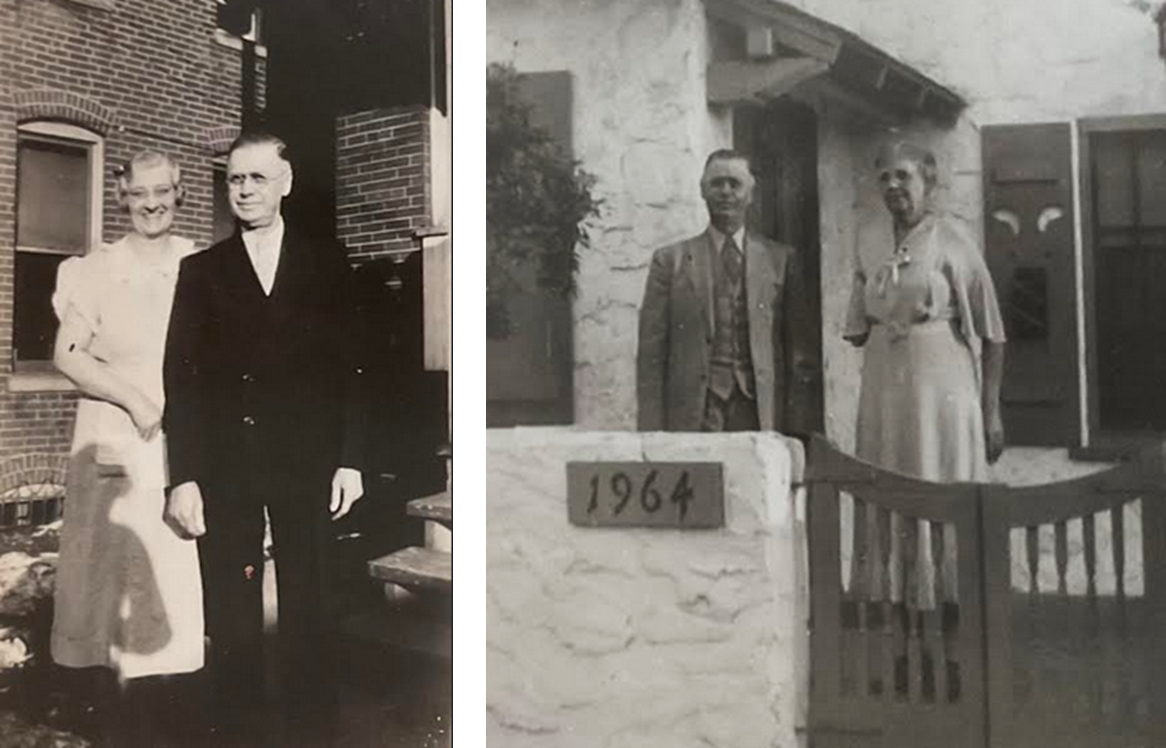
“Bert”, as she preferred to be called, became an even more important Green-family tie to my grandmother, Helen Hinkson Green, when she lost her husband Douglas in 1941. At age 32, she became a widow with two 13-month old daughters and a future which felt incredibly daunting and uncertain.
Between the earlier death of her father-in-law and the institutionalization of Doug’s brother Robert in 19331, Bertha was suddenly the only tangible piece of the Green family legacy Helen had left. Even though Bert’s marriage to Tim Green had been short-lived, she was a small anchor to that side of the family. So my grandmother hung onto the relationship ... as did Bertha.
To my mother Penny and her twin sister Jenny, Bertha was known as “Grannie Green.” And when I was young, Grannie Green was still alive and living in California. I don’t remember meeting her in person, but old photographs of me as a toddler indicate that I did.
Over the years, as time wained, the feeling of family connection with Bertha grew more faint. But there were still occasional letters and Christmas cards exchanged. Grannie Green was always considered “family”, even if it had been 30 years since she had been married to Tim.
Bertha died in 1973. But before her death, she penned a reminiscent letter to Helen and other family members. In it, she recalls many of the sweet memories she had of being part of the Green family.
The letter came into my possession recently. And as such, it seems fitting to add Bertha’s memories to the Green family history book that I have been compiling.
So without further ado here’s the contents of Bertha’s letter to my grandmother, Helen. I’ve sprinkled it with a bit of commentary and photos to help expand upon her memories. :)
January 21, 1971
To all of you who still remember me - greetings and salutations.
These last few weeks have been truly a time of remembering, and goes back to the first time I met that Hinkson school teacher who soon after became a member of the Green family. That was in the late summer of 1933.
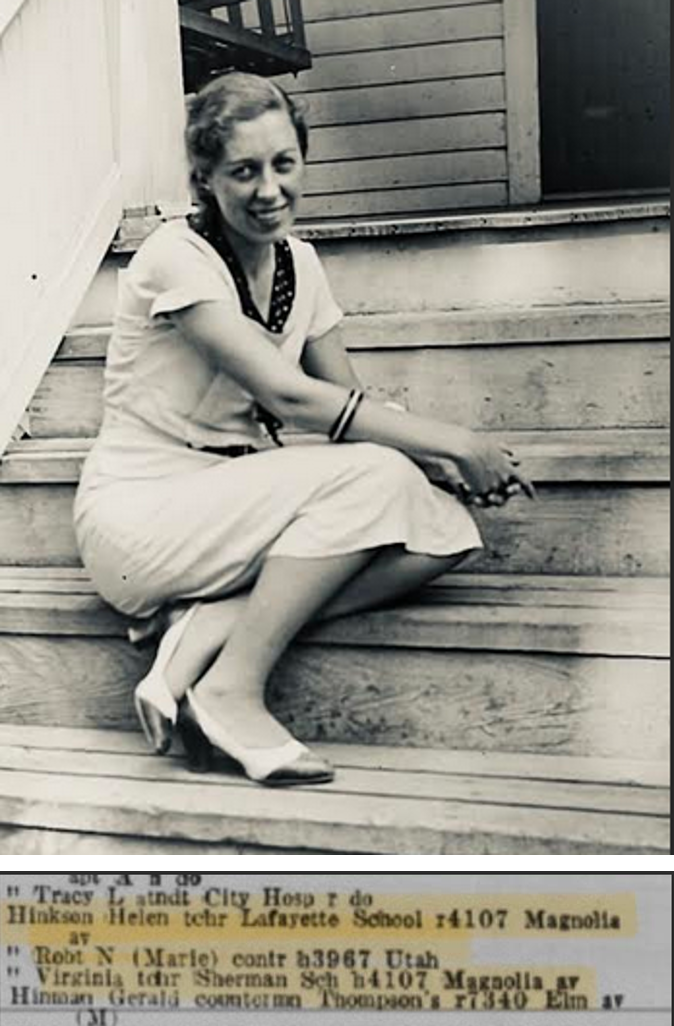
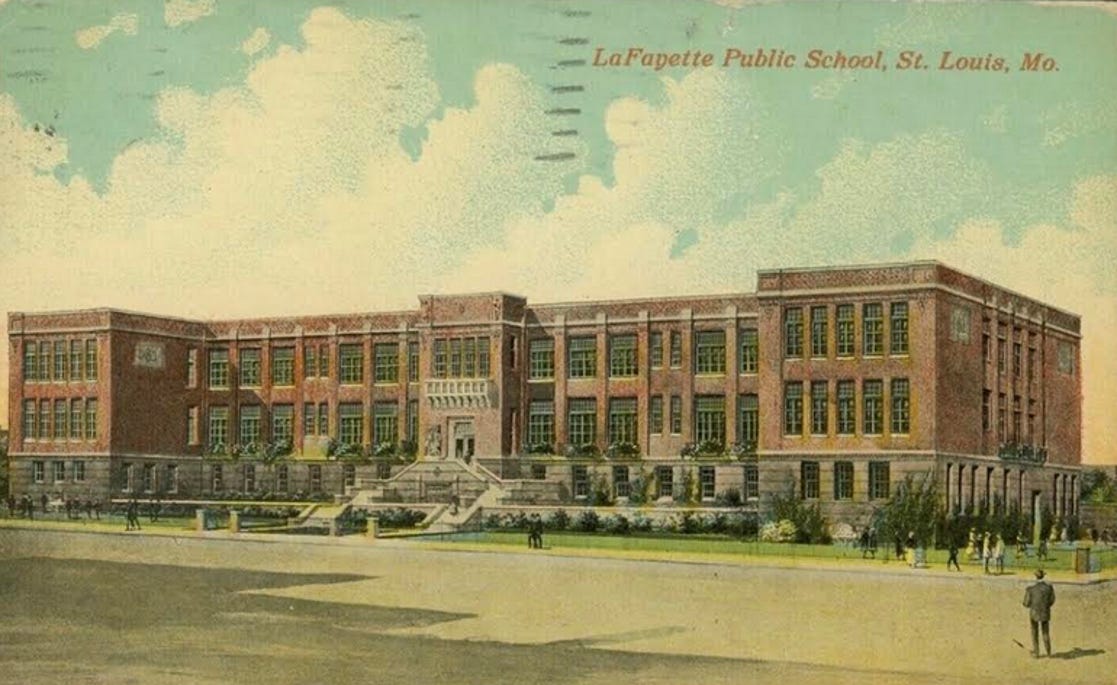
Helen Hinkson, my grandmother, was a young school teacher in St. Louis in 1933. She taught at the Lafayette Elementary School from 1932 until she married Doug Green in June 1936.
Tim and I visited Helen and Doug in Perryville, Missouri and in St. Charles. The trip to Perryville was a snowy one and we went on a Saturday afternoon via bus. The bus was so late that they had given us up and gone with another couple to a Movie. Some one at the Bus station told us they were there and we went there and had them paged. We finished the show with them and then to their home where we had a late snack. It was snowing again Sunday morning but Doug took us for a drive to show us the town. I do not remember about going to church. After a splendid dinner we boarded the bus for home. There were some hills on the way and we went side-ways down a couple of them. Of course we were late getting home but we were safe.
Helen & Doug Green’s Perryville and St. Charles years are covered in the chapter, The father (& grandfather) we never knew. Here are two photos from their Perryville years.
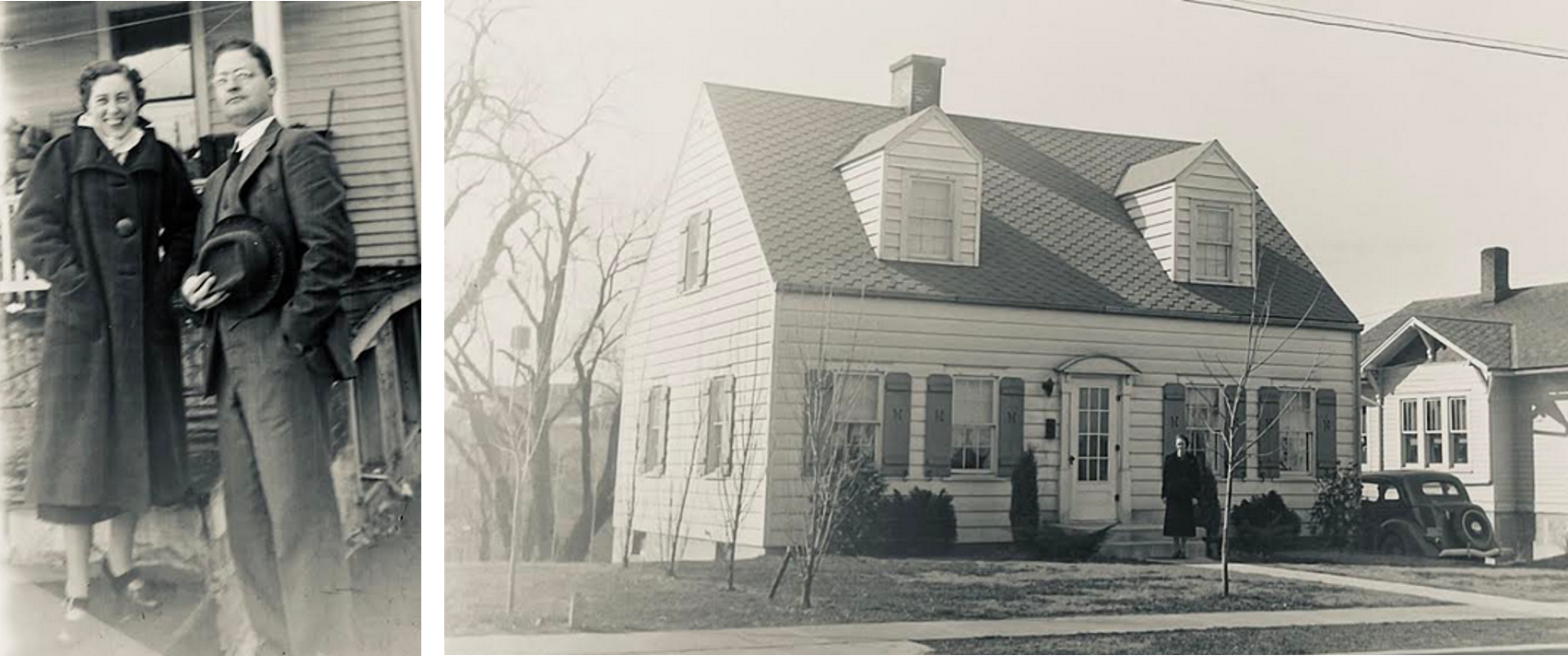
The next time I visited with them was in St. Charles. Helen picked me up and we drove there. Plenty of vacant property through there at that time. Doug phoned Helen that he was bringing home the dinner and that it would be fish. Helen, I think you had visions of having to clean said fish, but lo and behold it came all dressed and there was nothing to worry about. It was delicious, but then Helen was always a good cook.
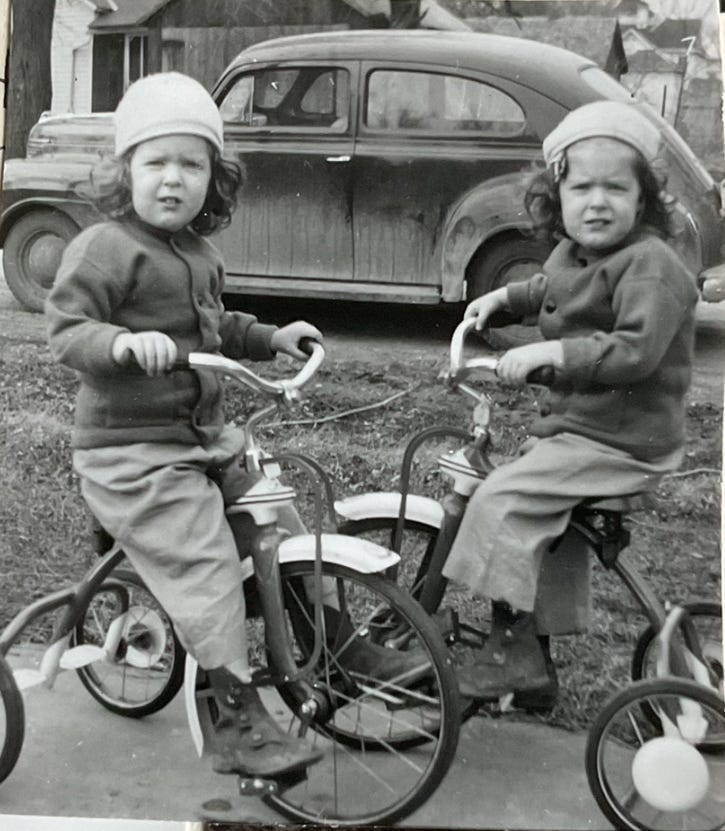
Then I went to California and the next meeting was in Lordsburg, N. Mex and there were two cherubs to love and be loved. Not very old, they had their first tricycles and rode mostly in circles. One of you girls insisted on pulling your stocking cap down over one eye. You could not touch my purse because that was “reportant.”
Bertha moved to California to be with her daughter around 1938 after Tim Green’s death. When Doug died in 1941, Helen moved with the twins to Lordsburg, NM for a teaching job. There she lived in a duplex next door to her sister Virginia (also a teacher) and brother-in-law, Jimmy LaSallee. Here are the twins on their tricycles.
It was during War time and there was a prisoner of war camp near there. Virginia lived in the other half of the duplex. The girls had slight colds. Helen and Virginia both carried cleanex in their sweater pockets and little ones helped themselves. One time Penny found a pocket empty and she spoke up with “rationed?”
The Lordsburg N.M. years occurred in the mid-1940s, after Doug Green’s death. These are covered in my grandmother’s memoir, titled It Takes a Pair, about raising twins as a single parent.
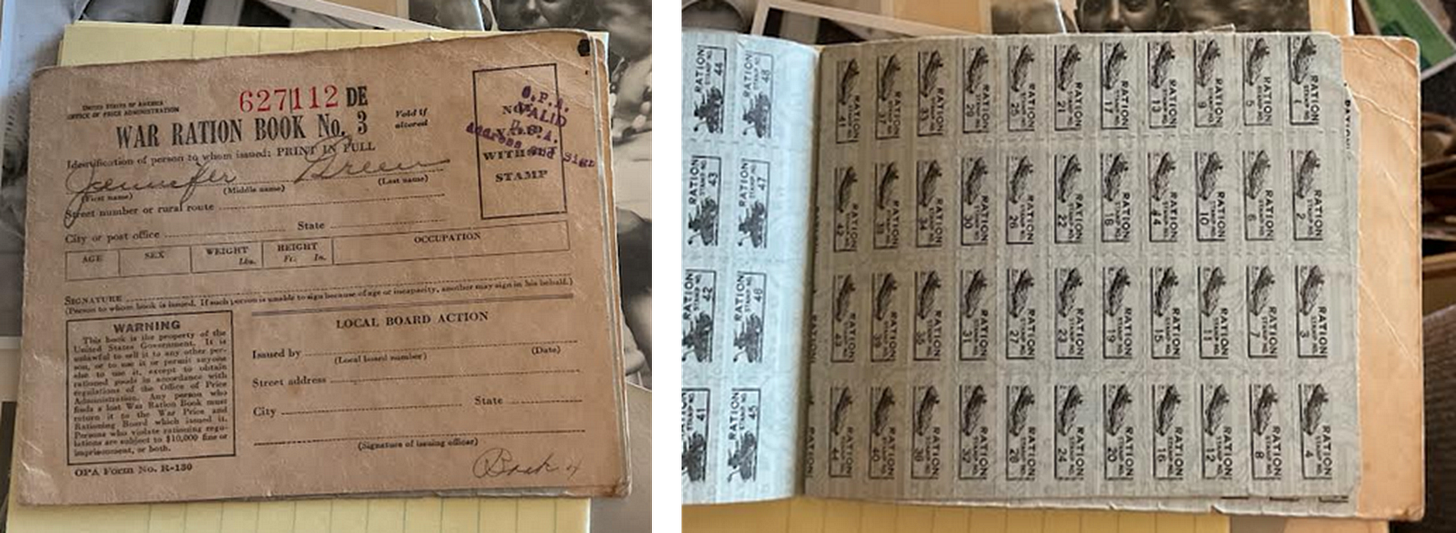
Camp Lordsburg was initially built as a Japanese interment camp. But, by 1943 the camp had been transitioned to house thousands of Italian and German poisoners of war. Here’s a photo of a surviving ration book from these years.
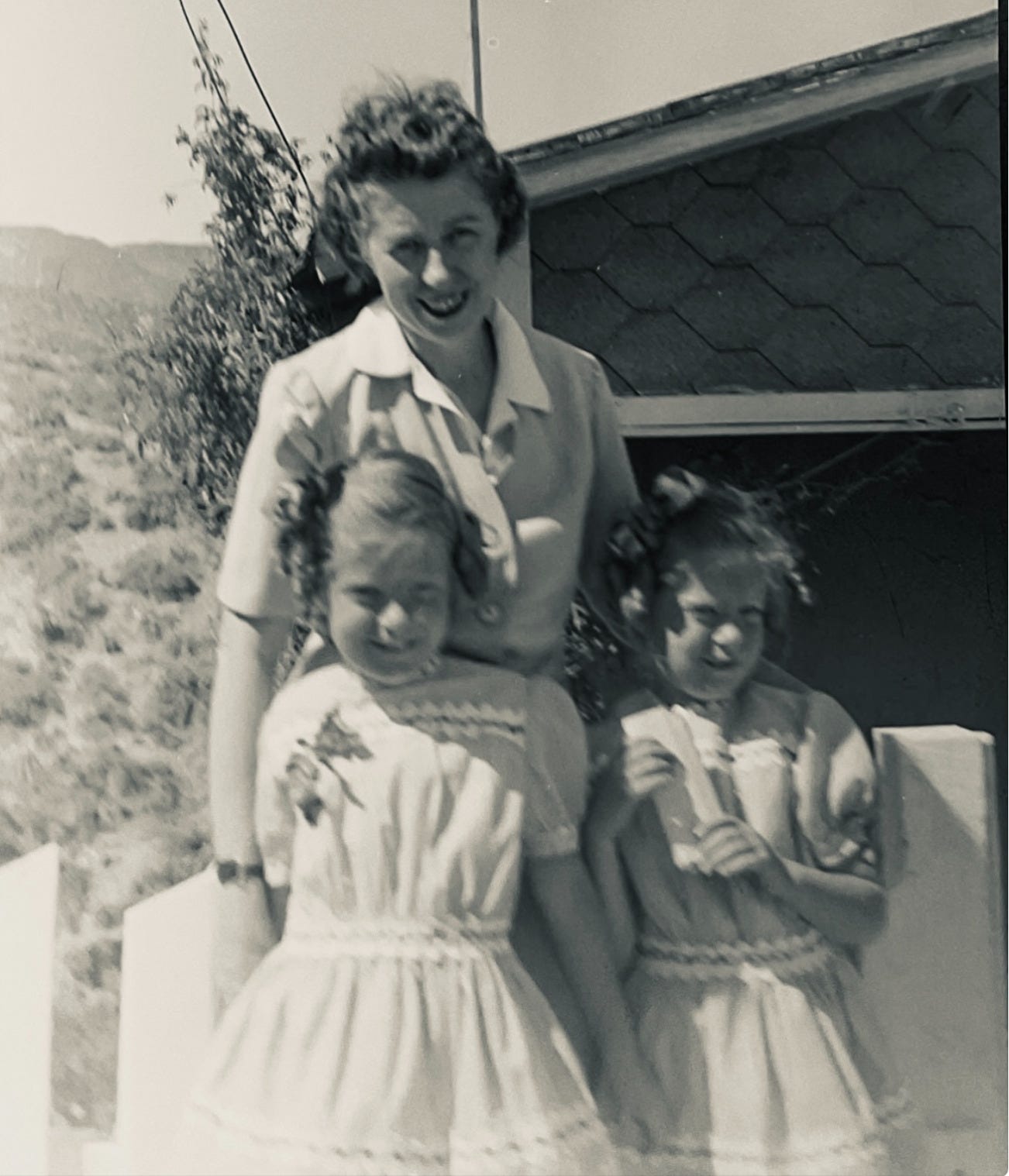
Next stop was Miami, Arizona and the house was on a hillside – the driveway side and I was afraid Helen would get too close to the edge. But she didn’t. That was the place where one of the little ones got herself lost and the whole town was on the look out. Remember? And when a man from the Sheriff Department wanted to pick her up and take her to her mother she refused to get into his car because he “wasn’t an officer, he was just wearing a Daddy hat.” We went to a very nice place to eat very good Mexican food. Both of the girls had their first sodas and when the said sodas “talked back” to them they were embarrassed. Helen drove me to the train and at the depot there were Indians around the station – just sitting there with their backs against the wall and feet straight out in front of them. The little girls were wearing such pretty green coats and evidently the Indians had never seen identical twins for they looked from one child to the other – like watching a tennis game.
The story about the whole town on the lookout for my lost mother, can be found in my grandmother’s memoir in the chapter titled, The day we lost Penny. This is a photo of the family in front of the home “on the hillside.” The Miami, NM years are also covered in It Takes a Pair.
I think the next stop was Griggsville and I went there via bus from St. Louis. The town was so beautiful because of the trees which were along the streets and met with their branches overlapping. The home was just across the street from the school where Helen taught. That is where I took the samplers to Penny and Jenny and I was so proud of them because they knew the names of the samplers. When I was the age they were then I would not have known a sampler if it had walked up and said good morning to me. We all went to tea at the home of a friend of Helen’s whose mother was an invalid. The lady had the most beautiful African Violet growing in a sunny window.
The Griggsville, Illinois years are also covered in It Takes a Pair.
A few years ago I discovered that the wild bird seed which I buy for the doves in our back garden was packaged in Griggsville. Another thing – we sat up until midnight talking and Helen worked all of that time sewing new cuffs on four coat sleeves which belonged to red heads.
Then to Michigan where Helen was teaching by day and studying by night working for her Masters. The girls were in High School. We went to a game in the evening, I think. The girls were interested in the Order of Rainbow for Girls at that time. That was before they knew there boys.
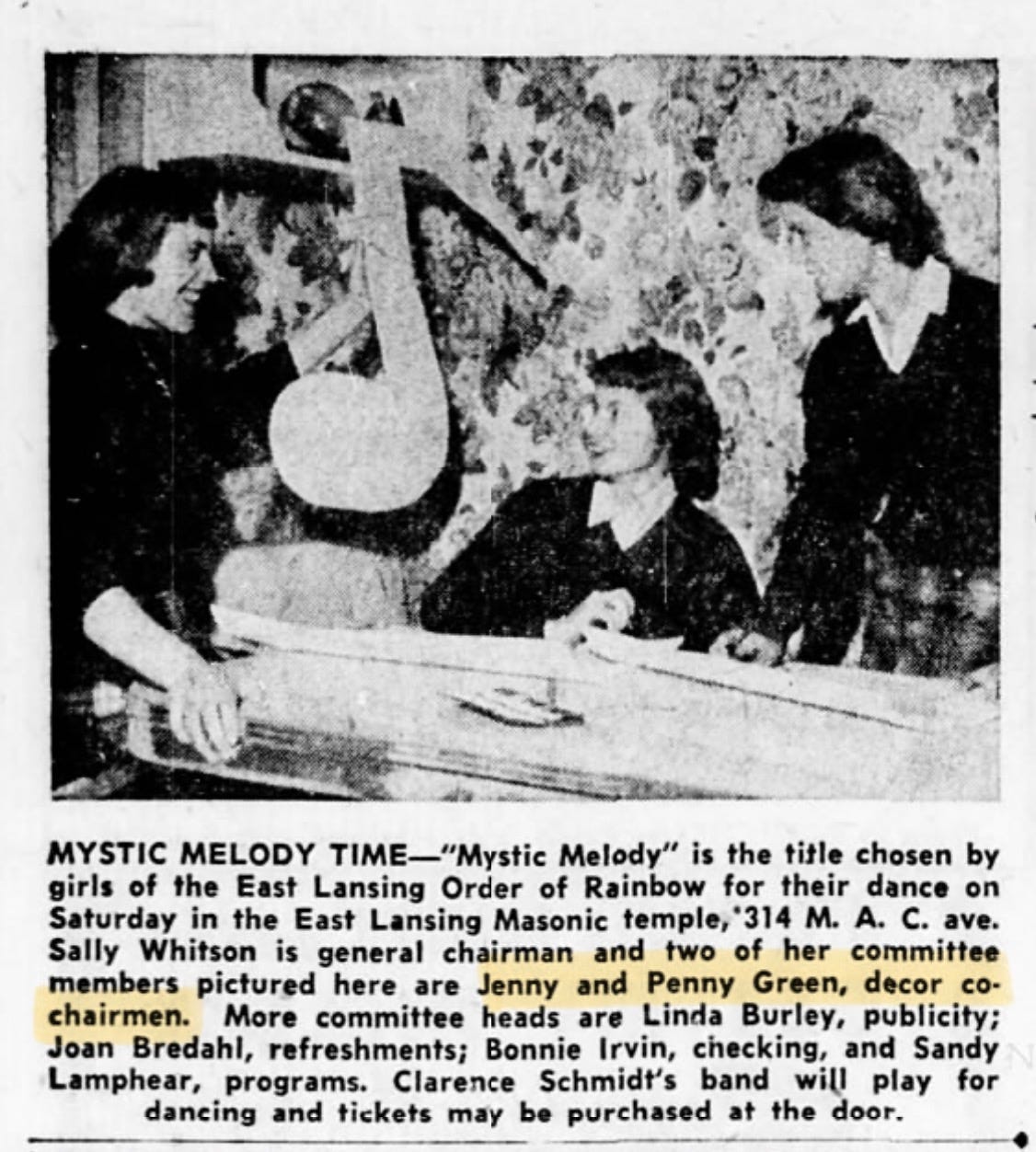
The Order of Rainbow was a rapidly growing service organization in the 1950s, it was dedicated to teaching leadership, civic duty, and character development to young women aged 11 to 20. Rooted in Christian values, the organization utilized a color-based ritual system to emphasize distinct virtues such as love, religion, nature, and patriotism. Here is a newspaper photo from 1956 when the 16 year-old twins served as decor co-chairs for an Order of the Rainbow dance:
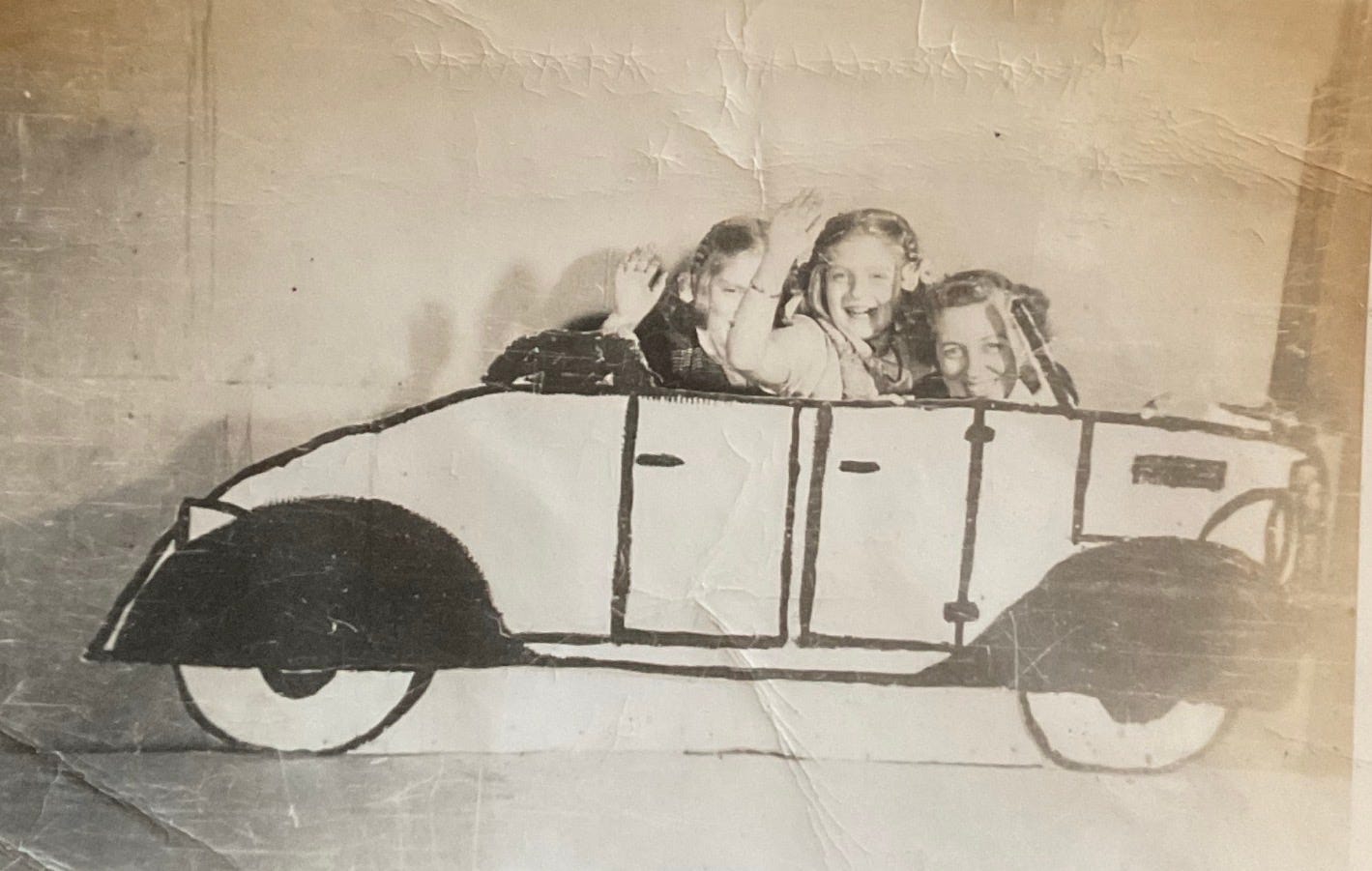
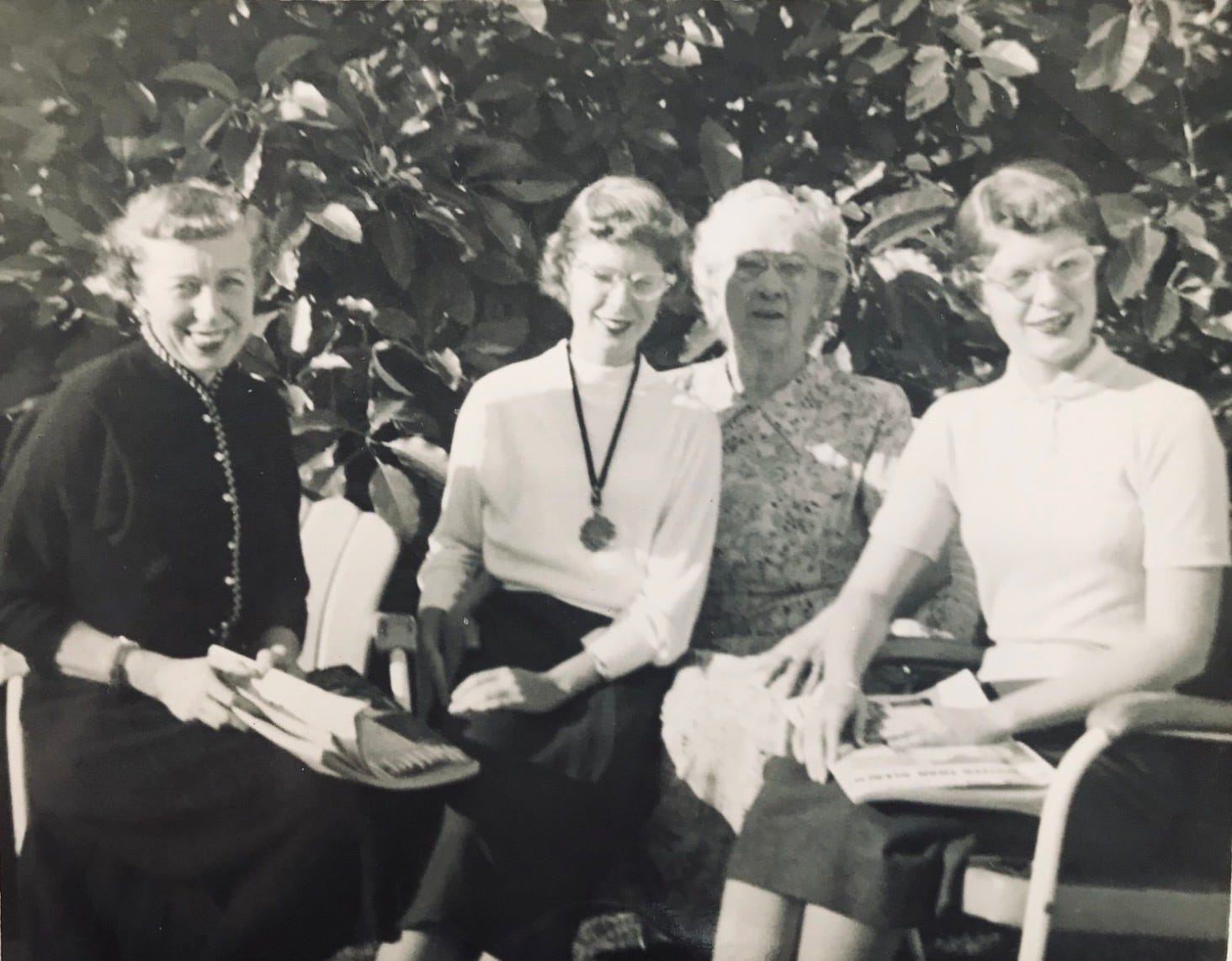
A memory that Bertha missed in her letter recap was the Green family trip to Los Angeles in 1956 to watch Michigan State play football in the Rose Bowl. The twins were sophomores in high school. They visited with Grannie Green and had this photo taken.
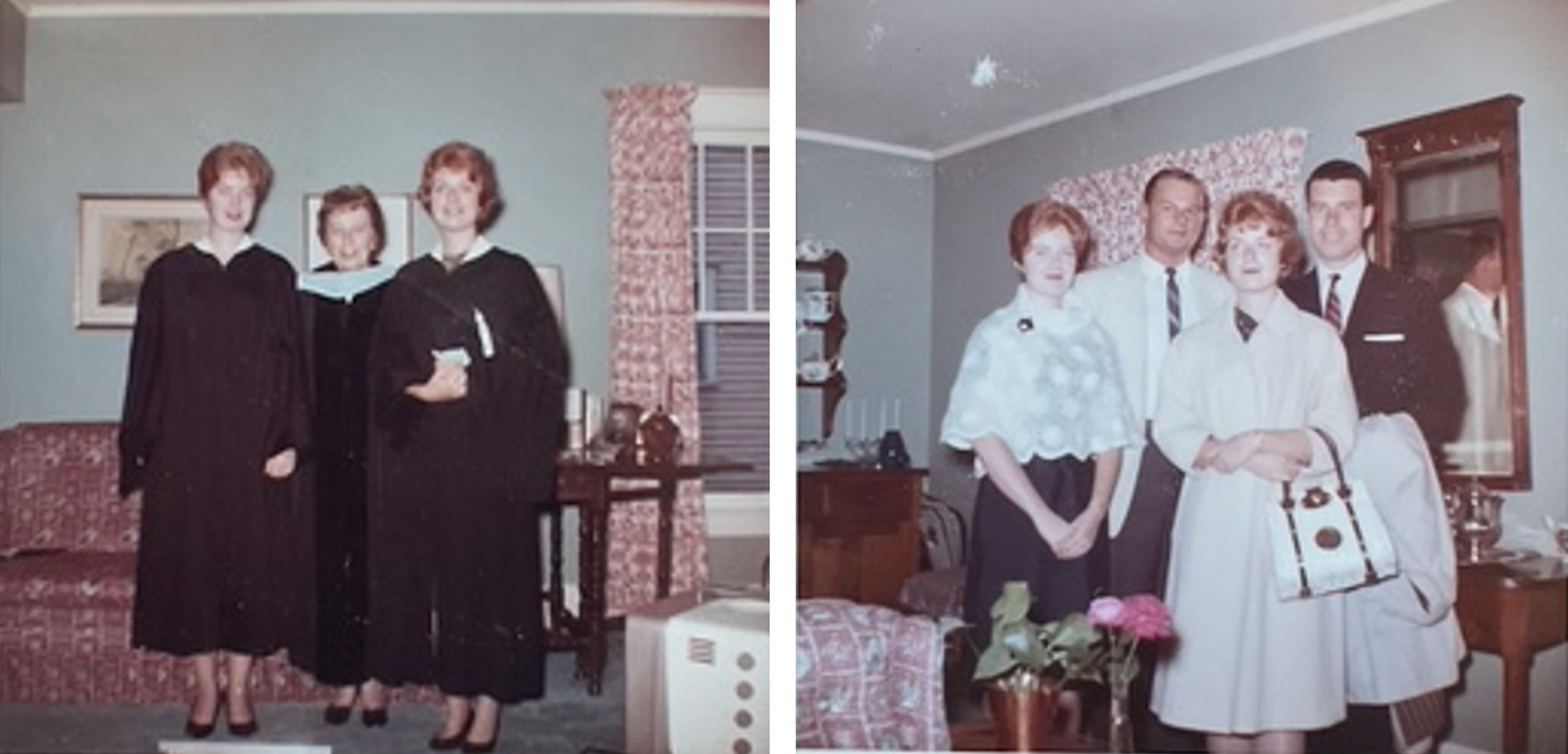
Then to Michigan for College graduation. Marie Hinkson and I went to Chicago where we met Grandmother Hinkson and went on to East Lansing together. What a fun time those days were. The day of the graduation it rained. There were boys to share in all the festivities. And share in the future plans for the future which included Penny and Jenny as well as Bert and Larry.
The twins both graduated from Michigan State in June 1962 with both earning degrees in Education. By the end of the year, both girls would be married to their respective fiancés. 1962 was a very eventful year.
Just as I wept for Tim when he could not know the joy of watching two little girls become two lovable ladies so I could have wept for Doug that he could not have seen their growth and known them as we do now – benefiting from the past, enjoying the present and looking with confidence to the future.
As I have been remembering all this how fortunate I am to have shared in all of this. Thank you, thank you again.
Helen I still wonder that you could have accomplished all of this and a Masters and a Doctorate besides,
Now if you can finish that BOOK – get it published and see it become a best seller in its field can’t you just relax, sit in a comfy rocker, put your feet on the fender, with a good book over which some one else had labored, maybe with a box of Mavarakas candy and dream.
Memories – memories what would we do without the r gift?
My best to all of you, now and always
Bert
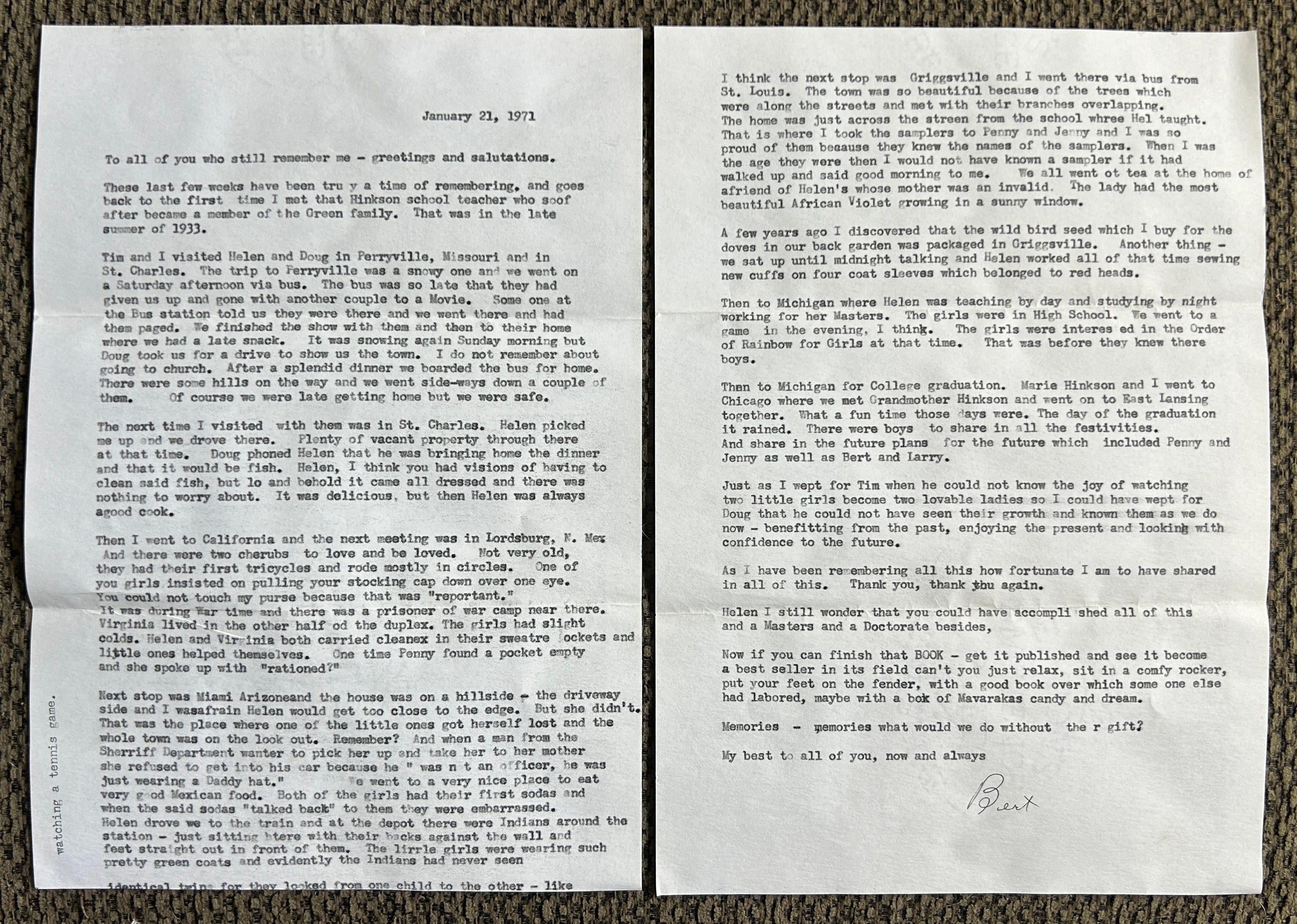
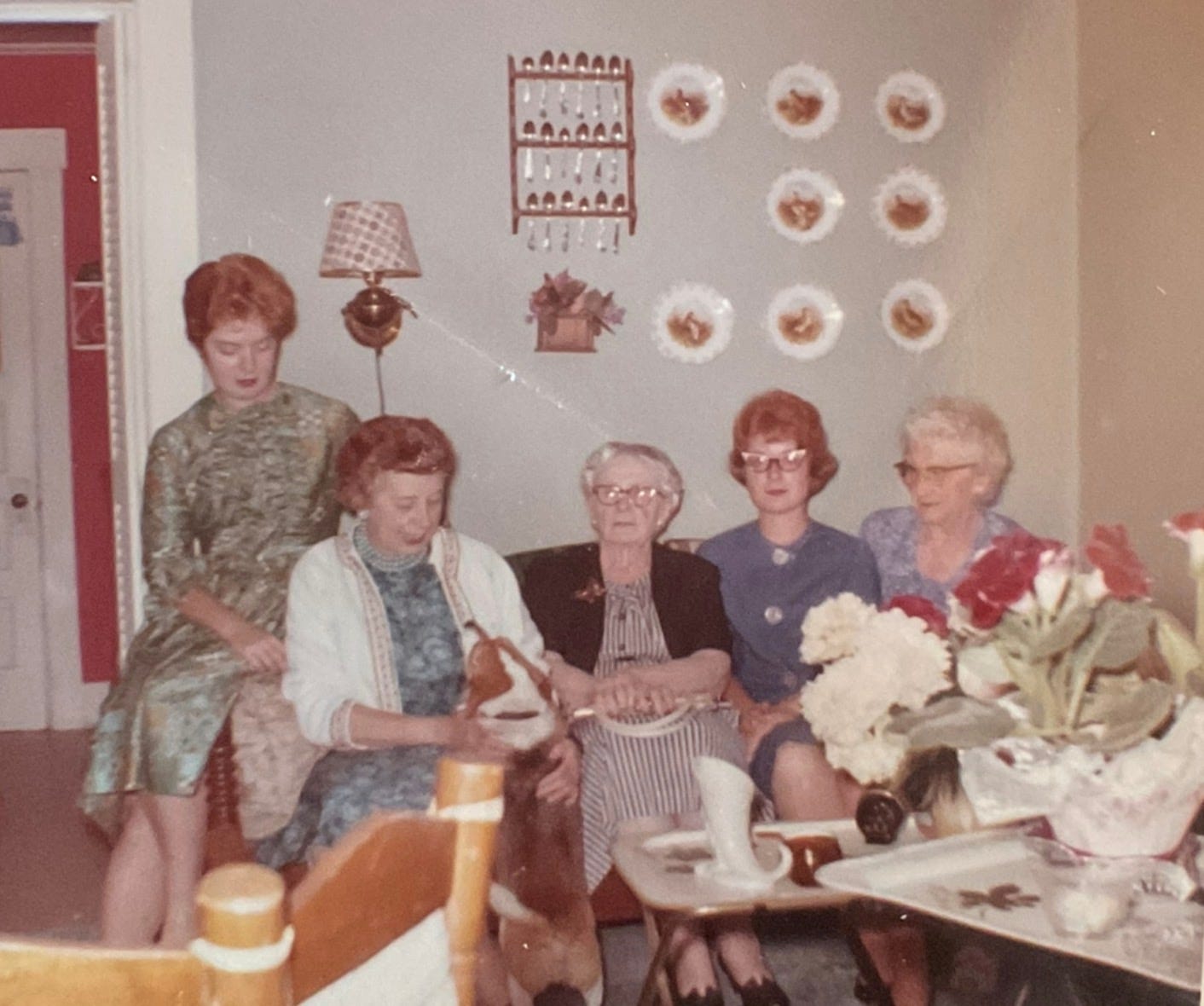
Last but not least to top off all these memories… here’s two photos from 1966 when Grannie Green visited my family in Hacienda Heights (Los Angeles), right before we moved from California to Wisconsin.
Robert Green entered the Missouri State Mental Hospital in September 1933 at the age of 25 and never left.
This touched me deeply. Bertha's words carry such tenderness that they seem to collapse the decades between then and now. What could have remained an old family letter instead becomes a living conversation across generations. The love she held for your family shines through every memory, reminding us that the people who leave the deepest marks on our lives aren't always connected by blood, but by kindness, loyalty, and shared moments. Thank you for preserving her voice so beautifully, it feels like a gift to both your family and every reader who treasures family history.
The payoff for me as a reader of the memoir is that this letter hits so many references to things I'd previously learned about Helen. I really appreciated the annotations to her letter. Family is more than blood relation.